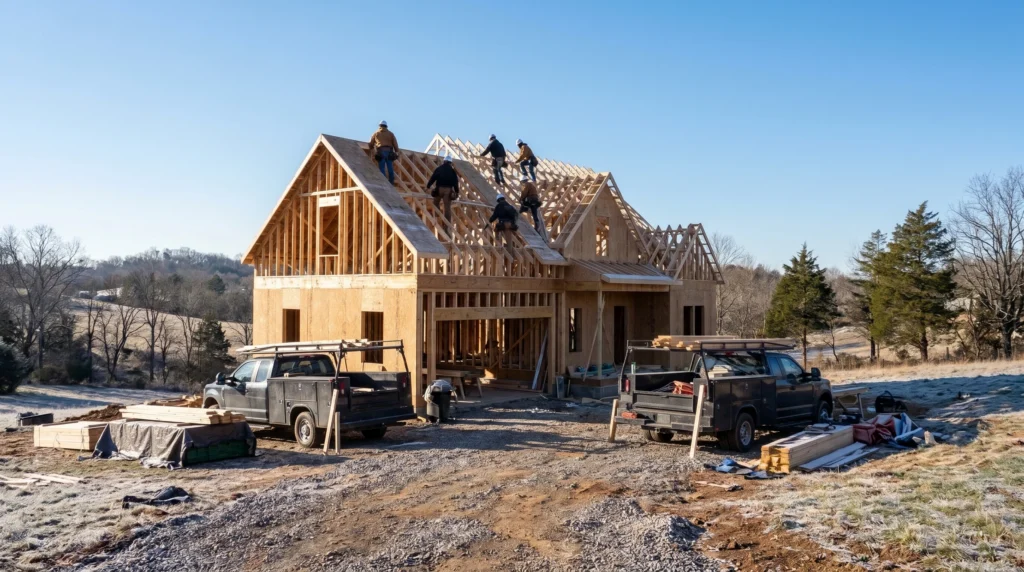
Building a house in Tennessee in winter is very doable, and many crews keep working straight through December, January, and February. Our winters are milder than in northern states, but freezing nights, ice, and wet weeks still change how a build runs. As a veteran owned custom home builder based in Columbia, TN, and a Tennessee licensed general contractor (License #82787), AMC Construction helps landowners across the state plan around these limits so a cold start does not turn into a costly one.
Timing matters, but it is only one piece of the plan. Our guide to the best time of year to start building a house compares all four seasons, and this post zooms in on winter: what slows a build, what changes your costs, and how to plan so your project keeps moving. Whether you own land in Maury County, Williamson County, or anywhere else in Tennessee, the same principles apply.
What Winter Really Looks Like for a Tennessee Build
Tennessee winters are a mix, not a deep freeze. According to National Weather Service records, Nashville’s average first autumn freeze lands around October 29 and the average last spring freeze falls around April 6. You can review the average first and last freeze dates for Nashville yourself, though the NWS page was last updated in 2018, so treat the dates as averages rather than promises. A freeze can arrive earlier or later in any given year, and most delays come from a few cold snaps or rainy weeks, not from months of frozen ground.
Key points to remember
- Frozen or muddy ground is the biggest slowdown for clearing, grading, and footings.
- Days are short, so crews get fewer working hours.
- Fresh concrete needs protection from freezing.
- Once the roof and walls are closed in, interior work moves well in cold weather.
- Holidays can slow inspections, deliveries, and crew availability.
What Slows Down Building a House in Tennessee in Winter
Most winter delays are predictable, which means they can be scheduled around. Here is what we plan for on every cold season job site.
- Mud and frozen soil. Much of Middle Tennessee has clay heavy soil. When it is wet, it turns into thick mud that can stall equipment for days.
- Ice and rain. Ice storms and heavy rain can pause outdoor work such as roofing, grading, and framing.
- Short daylight. Fewer hours of light means fewer hours of work each day.
- Wet lumber. Lumber that gets wet should dry before walls and floors are closed up, so crews work to get the house dried in quickly.
- Holiday slowdowns. Inspections, material deliveries, and crews can slow down near Thanksgiving and the end of the year.
None of these stop a build. They change the calendar, which is why a builder who plans for weather will give you a better schedule than one who ignores it.
Foundations and Concrete in Cold Weather
Concrete is the step most affected by cold. Fresh concrete can be damaged if it freezes before it gains strength, so crews protect it with insulated blankets, heated enclosures, or adjusted concrete mixes. The American Concrete Institute publishes a cold weather concreting guide that many contractors follow, and it is worth knowing it exists before you hire anyone.
Ask your builder how they protect footings and slabs, and who decides when a pour should wait for better weather. Building a house in Tennessee in winter works best when the foundation is poured on a mild day, protected right away, and given time to gain strength before the heavy framing loads arrive. Added protection can add cost, so it should show up in your written estimate.
Fall Start vs Winter Start: The Difference Between Them
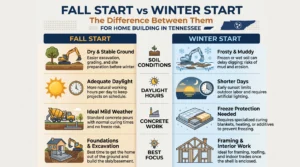
Many families ask whether starting a build in the fall is smarter than waiting for winter. Fall often brings drier soil and easier scheduling, so it suits site work and foundations. Winter can still work well, especially when the foundation is already in place. Here is how the two compare.
| Factor | Fall Start | Winter Start |
| Soil | Often drier | Frozen or muddy at times |
| Daylight | Shortening days | Shortest days of the year |
| Concrete work | Cool and workable | Needs freeze protection |
| Crew schedule | Often easier to book | Open, but holidays slow things |
| Best focus | Site work and foundations | Framing, dry in, and interior work |
The plan that works for many Tennessee families is simple: pour the foundation in fall, then use winter for framing, dry in, and the work inside the house.
What a Winter Build Timeline Looks Like
Every project is different, but here is the general order of work for a home whose foundation is finished by the start of winter.
- Early winter: Framing, roofing, windows, and dry in, so rain and snow stay out.
- Midwinter: Rough plumbing, electrical, HVAC, and the inspections that go with them.
- Late winter: Insulation and drywall.
- Early spring: Cabinets, exterior work, finishes, and landscaping.
Permits and Site Work: Plan Before the Cold Arrives
Permits set your real start date in every season. Our guide to permits to build on your own land in Tennessee explains which offices are involved. Read the residential permit requirements in Tennessee as well, since the State Fire Marshal’s Office handles residential permits in some areas, while others are handled by the city or county.
If your lot has no sewer connection, you will need a septic system. TDEC states that the septic permit timeline in Tennessee can run up to 45 days from receipt of a complete application, and an environmental scientist evaluates the site first. Soil evaluations can slow down in wet or frozen weather, so apply early. Our steps to build on your land show the order we follow: lot review, utilities, survey and soil work, financing, plans, permits, and inspections.
Good winter site work also includes a few simple protections:
- A gravel construction entrance to keep mud off public roads
- Proper drainage so water moves away from the foundation area
- Silt fencing to hold soil on your lot and out of your neighbors’ yards
What Winter Does to Your Budget
Season alone rarely decides the price of a home, but it does shape several costs. Planning for building a house in Tennessee in winter should include these items from day one.
- Cold weather protection. Concrete poured near freezing may need blankets, heated enclosures, or special mixes.
- Weather delays. Lost days can add equipment and crew time.
- Holiday slowdowns. Inspections and deliveries can take longer near the end of the year.
- Material lead times. Ordering windows, trusses, and custom items early helps you avoid waiting.
- Dry in speed. Closing the house quickly protects framing and materials from rain and snow.
Ask for written bids that show what is included, what weather allowances exist, and how change orders are priced and approved. We never quote a number without seeing the lot, because rock, slope, and soil change every project.
How to Choose a Builder for a Winter Start
A builder who knows cold weather work will answer these questions without hesitation. Use this list before you sign anything.
- Start with contractor license verification in Tennessee to confirm the license is active. AMC Construction holds Tennessee General Contractor License #82787.
- Look at finished work such as our completed homes, and talk to past clients.
- Ask how the schedule changes if ice, rain, or a hard freeze arrives.
- Ask how they protect concrete and keep framing lumber dry.
- Get a written scope, schedule, and payment plan.
Winter Build Readiness Checklist
- Confirm your land is buildable and zoned for a home.
- Finish your survey and soil evaluation.
- Apply for septic approval early if you need it.
- Finalize your plans, budget, and construction financing.
- Plan the foundation for a mild weather window.
- Build extra days into the schedule for ice, rain, and holidays.
Frequently Asked Questions
Q: Is building a house in Tennessee in winter a bad idea?
A: No. Many Tennessee crews work through winter. Concrete needs freeze protection, and ice or rain can pause outdoor work, but interior work moves well once the house is dried in. A realistic schedule is key.
Q: Does building a home in winter cost more?
A: It can. Cold weather protection for concrete, weather delays, and holiday slowdowns can add time and labor. Season rarely sets the price alone, so compare written bids that list what each one includes.
Q: How long does a septic permit take before winter starts?
A: TDEC says approval can take up to 45 days after it receives a complete application, and a TDEC scientist evaluates the site first. Apply well before winter so the permit does not delay your start date.
Q: Is fall or winter better for breaking ground in Middle Tennessee?
A: Fall often has drier soil and easier scheduling, so it suits site work and foundations. Winter works best once the foundation is done and the house gets dried early. Your lot and permits matter most.
Q: What should I check in a home after a winter build?
A: Walk the house with your builder and keep your warranty papers. Watch for drywall cracks, sticking doors, and drainage problems as the house settles. Ask how wet lumber was dried before the walls were closed.
Final Thoughts
Building a house in Tennessee in winter is not about beating the weather. It is about planning around it: protect the concrete, get the house dried in early, finish permits and septic approval before the cold arrives, and hire a builder who explains how weather affects your lot. If you own land and want a straight answer about your site and your start date, book a free home consultation with our local team, or call us at 931-416-5131.
AMC Construction is a veteran owned builder in Columbia, TN, serving landowners across Tennessee since 2013. Tennessee General Contractor License #82787.

How Much Does Basement Finishing Cost in Middle Tennessee?
Basement finishing cost in Middle Tennessee depends on size, moisture, layout, and finish level, and most homeowners want a clear number before they commit. At AMC Construction, a veteran owned builder based in Columbia, TN, we walk families through that number every week. Our home remodeling services cover everything from a simple family room to […]
Read More… from How Much Does Basement Finishing Cost in Middle Tennessee?
Remodeling Home Contractors in Franklin TN: Avoid These Errors
Hiring the wrong crew is one of the most expensive mistakes a homeowner can make. If you are searching for remodeling home contractors in Franklin, TN, you already know the stakes. A kitchen update, bathroom overhaul, or full home renovation is a major investment, and the difference between a smooth project and a stressful one […]
Read More… from Remodeling Home Contractors in Franklin TN: Avoid These Errors

How to Choose a Custom Home Builder in Franklin TN
Choosing the right custom home builder in Franklin TN is one of the most important decisions you’ll make when planning your dream home. The wrong builder can cost you time, money, and stress, while the right builder ensures your vision becomes reality with efficiency, quality, and transparency. This comprehensive guide explains how to select a […]
Read More… from How to Choose a Custom Home Builder in Franklin TN