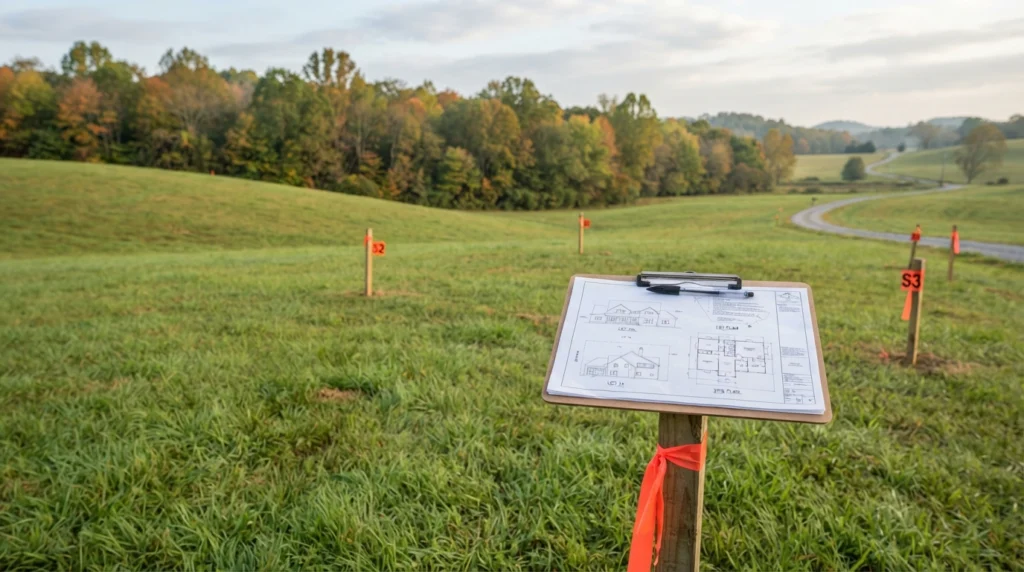
You finally own a few acres in Middle Tennessee. You can already picture the house, the porch, and the view. Then a neighbor says, It’s your land, so you don’t need a permit, right? So, do you need a permit to build on your own land in Tennessee? In most cases, yes.
Owning land gives you the right to build, but not the right to skip the rules. In this guide, you will learn which permits you will likely need, who issues them, the order to get them, and the mistakes that cause the longest delays.
Permit rules change and vary by county and city. Always confirm the current requirements with your local offices before you start.
So, Do You Need a Permit to Build on Your Own Land in Tennessee?
The short answer is yes for almost every new home. The exact list depends on where your land sits.
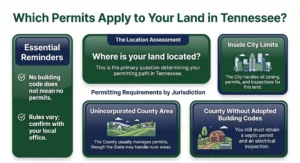
- Inside city limits: Cities like Columbia, Spring Hill, and Franklin run their own building departments. You will deal with city zoning, permits, and inspections.
- In an unincorporated county area: The county usually handles building permits. In some rural areas, the state handles residential permits and inspections instead.
- In a county without adopted building codes: A few rural Tennessee counties have chosen not to adopt residential building codes. Even there, you will still need other permits, such as a septic permit and an electrical inspection.
That last point surprises many landowners. No building code does not mean no permits.
Why Do You Need a Permit to Build on Your Property?
It is fair to ask why do you need a permit to build on your property when you already own it. Permits protect you as much as they protect your neighbors.
- Safety: Inspections check the foundation, framing, wiring, and plumbing before walls get closed up. Problems found early cost far less to fix.
- Financing: Most construction lenders expect permits and inspections before they release draws.
- Insurance: Insurers may question claims on work that was never permitted or inspected.
- Utilities: Power companies usually need a passed electrical inspection before they connect service.
- Resale: Unpermitted work can cause problems when a buyer’s lender or inspector asks for records.
In short, the permit process creates a paper trail that proves your home was built right.
The Permits You’ll Likely Need
Every property is different, but most new homes on private land need some version of the permits below.
Zoning and Land Use Approval
Before anything else, confirm that your land is zoned for a home. Check setback rules, minimum lot size, and whether your road frontage meets local standards. If you are splitting off part of a larger tract, you may also need a plat approved by the planning office.
Septic Permit in Tennessee
If you cannot connect to a public sewer line, you will need a septic system. In Tennessee, that starts with a soil evaluation, which shows whether the soil can absorb wastewater. The Tennessee Department of Environment and Conservation (TDEC) oversees septic permits through its Division of Water Resources, and some counties run approved local programs.
What we usually see is that this step decides more than any other. The soil results can affect where the house sits, how many bedrooms you can permit, and what type of system you need. Apply for your septic permit in Tennessee early, because weather and scheduling can slow soil testing.
Building Permit
The building permit covers the house itself. You will usually submit a site plan, house plans, and details about the foundation, framing, and energy code requirements. In most cases, a licensed contractor pulls this permit on your behalf. If you build with our custom home building team, ask us early which permits we will handle for your project.
Electrical, Plumbing, and Mechanical Permits
Tennessee requires electrical permits and inspections statewide. Where there is no local inspection program, the Tennessee State Fire Marshal’s Office handles electrical inspections and, in some areas, residential building permits too. Plumbing and HVAC permits depend on your city or county.
Driveway and Road Access Permit
Connecting a new driveway to a public road often needs approval. For a county road, check with the county highway department. For a state highway, you will need a permit from the Tennessee Department of Transportation (TDOT).
Building Permit Maury County: What Local Owners Should Know
Our team is based in Columbia, so we hear this question often. For a building permit Maury County landowners should start by finding out one thing: is the property inside city limits or in the unincorporated county?
- Land inside Columbia, Spring Hill, or Mount Pleasant city limits goes through that city.
- Land outside city limits usually goes through the county’s building and codes office.
Call the right office before you buy plans or clear land. Ask about setbacks, required inspections, current fees, and typical review times. Our custom home builders in Columbia, TN can help you prepare the right documents before you apply.
The Order to Get Your Permits
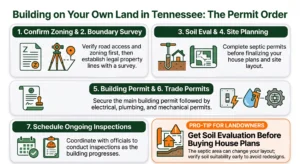
Getting permits in the wrong order is one of the biggest causes of delay. Here is the order that usually works best:
- Confirm zoning and road access. Make sure a home is allowed and your driveway can connect.
- Get a survey. A boundary survey shows property lines and helps with setbacks.
- Complete the soil evaluation and septic permit. The results often decide where the house can go.
- Finalize your house plans and site plan. Place the home around the septic area and setbacks.
- Apply for the building permit. Submit plans and pay fees.
- Pull trade permits. Electrical, plumbing, and mechanical permits usually follow.
- Schedule inspections as you build. Pass each one before moving to the next stage.
Our guide to building on your land in TN walks through the full process from land to move-in.
Common Permit Mistakes We See
- Buying house plans before the soil test. The septic area can force a smaller footprint or a different layout.
- Clearing or grading too early. Heavy equipment can damage the best soil for a septic field.
- Assuming a barn or shop rule applies to a house. A home almost always needs more approvals than a farm building.
- Skipping the driveway permit. A rejected road connection can delay the entire project.
- Starting work before the permit is issued. This can lead to stop-work orders and fines.
If you need help planning site work around your permits, our construction services in Columbia cover the early stages of a build.
Pre-Build Permit Checklist
- Confirm whether your land is in city limits or the county
- Check zoning, setbacks, and minimum lot size
- Order a boundary survey
- Schedule a soil evaluation for your septic system
- Confirm driveway access rules for your road
- Get house plans that fit your site
- Ask your builder who pulls each permit
- Keep copies of every permit and inspection report
Frequently Asked Questions
Can I build a house without a permit in Tennessee?
Not legally in most places. Even in the few rural counties without adopted residential building codes, you still need permits for your septic system and electrical work. Building without required permits can lead to fines, stop-work orders, trouble getting power connected, and problems when you sell or refinance the home later.
Do I need a permit to build a barn or shed on my land?
It depends on the size, use, and location. Some farm buildings may be exempt from certain building rules, but a structure with living space, plumbing, or electrical work usually needs permits. A barndominium in Tennessee is treated like a home, so plan for full permits.
How long does it take to get a building permit?
Review times vary by city, county, and season. A simple permit may move quickly, while a new home with a septic system can take several weeks or longer. The soil evaluation is often the slowest step. Start early and submit complete plans to avoid back-and-forth corrections.
How much does a building permit cost in Tennessee?
There is no single statewide fee. Most offices base fees on the home’s square footage or construction value, and septic, electrical, and driveway permits are often separate. Call your local building office for the current fee schedule, and ask your builder to include permit costs in your project budget.
Who is responsible for pulling permits, the owner or the builder?
In most new home projects, your licensed builder pulls the building permit and schedules inspections. Owners often handle early steps like the survey and soil evaluation, but this varies. Before you sign a contract, ask your builder exactly which permits they will handle and which ones you need to apply for yourself.
Final Thoughts
Owning land in Middle Tennessee is a great start, but permits keep your new home safe, insurable, and easy to finance. Zoning, septic, building, electrical, and driveway approvals all play a part, and the order matters. If you still wonder, “do you need a permit to build on your own land in Tennessee,” the answer is almost always yes, and a little planning saves months of delays. Ready to build on your land? Book a free home consultation with our local team, and we will help you map out every step.
Burst Pipe or Leak in Tennessee? How to File a Water Damage Insurance Claim
A burst pipe at midnight or a slow leak behind a wall can turn into a costly problem within hours. If you are dealing with a water damage insurance claim Tennessee homeowners know the first few days matter most, because what you do now affects how smoothly the claim moves. This guide explains each step […]
Read More… from Burst Pipe or Leak in Tennessee? How to File a Water Damage Insurance Claim

What to Expect When Building a Luxury Home in Columbia TN
Building a luxury home is a rewarding journey—one that reflects your personal style, values, and long-term vision. At AMC Construction LLC, we specialize in high end custom construction projects throughout Columbia TN, offering a full-service experience from the ground up. Whether you’re creating your forever home, a private retreat, or an investment property, this guide […]
Read More… from What to Expect When Building a Luxury Home in Columbia TN

How to Start and Succeed in the Commercial Construction Industry
The commercial construction industry is one of the most complex and opportunity-driven sectors in the building market. Anyone aiming to start and succeed in the commercial construction industry must understand that this field goes far beyond basic construction skills. It requires strategic planning, financial discipline, regulatory compliance, and strong operational systems. Commercial construction projects include […]
Read More… from How to Start and Succeed in the Commercial Construction Industry